Sound Therapy for Reactive Tinnitus: Honest Help, Not a Cure
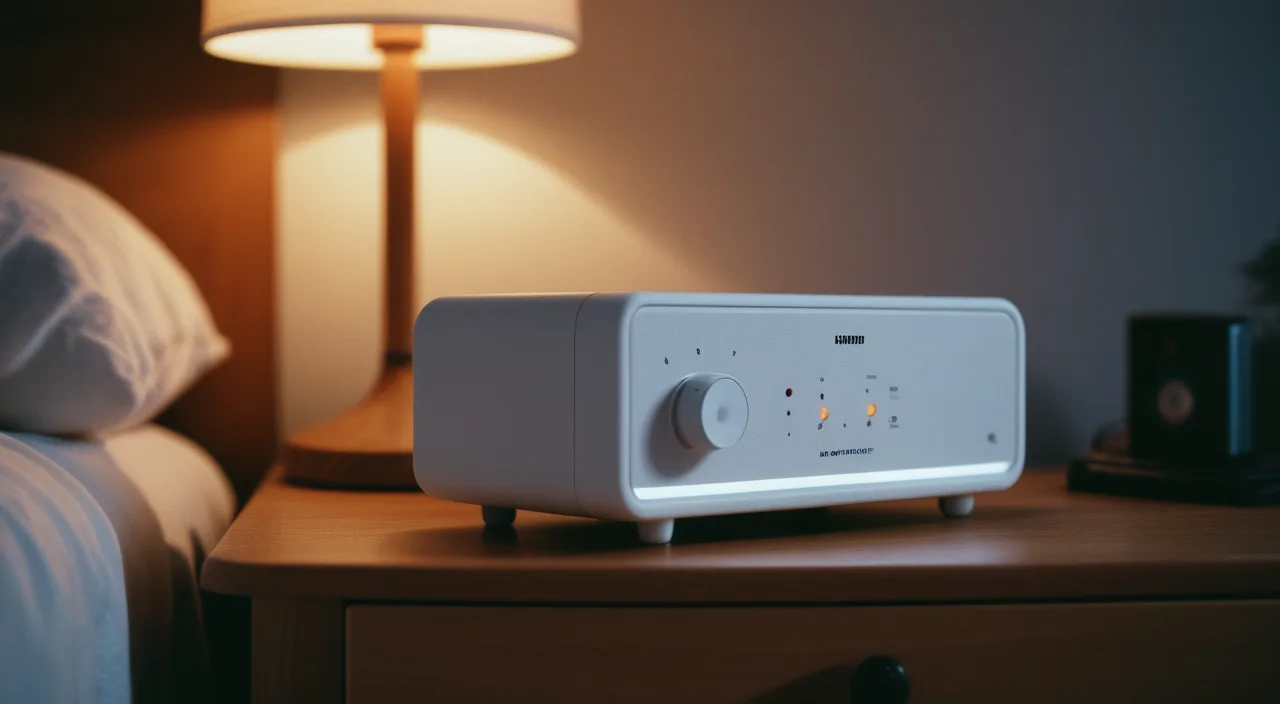
If your tinnitus reacts to sound, "add more sound" sounds like the last thing you should do. This page explains why the opposite is usually true, what the research actually supports, where the honest uncertainty lies, and how to use sound without provoking the reactivity you are trying to calm.
Why sound helps a system that overreacts to sound
The working model behind reactive tinnitus is central gain: an auditory system that has turned its internal amplifier up, so ordinary input lands louder than it should and the tinnitus rides on top of it.2 Gain follows input. The clearest controlled finding in this whole field is that two weeks of earplug use made people's loudness tolerance drop by roughly 6 to 7 dB, while two weeks of gentle sound-generator use made tolerance rise by about the same amount, with the effect washing out in around a week.1
That is the entire case for sound enrichment, stated honestly: tolerance is trainable, in both directions. Silence trains it the wrong way. Steady, comfortable sound trains it the right way. Nothing in that finding promises the tinnitus disappears; it predicts the reactivity, the spiking at faucets and fans, tends to ease as tolerance rebuilds.
What "sound therapy" actually covers
- Sound enrichment: ambient, low-level sound through the day and especially at night. A fan, a quiet sound machine, rain audio, an open window. Free or nearly free, no clinic required.
- Maskers and sound generators: wearable or bedside devices producing broadband noise around the tinnitus level. Same principle, more control.
- Tinnitus retraining therapy (TRT): structured counselling plus prescribed sound over many months, through a clinic.
- Hearing aids: when hearing loss exists, restoring input is itself a form of sound therapy, and the best-supported one for that subgroup.
The honest evidence picture
Major guidelines disagree about sound therapy, and you deserve to know that before spending money. The 2023 review of tinnitus guidelines found the evidence base for most interventions "limited and, in many cases, unsatisfactory": the US guideline lists sound therapy as an option, while the German S3 guideline recommends against it.5 Claims that sound therapy and TRT are useless were not supported either; the fair reading is mixed evidence, low risk, real cost variation.
Three practical conclusions follow. First, free and low-cost enrichment is worth trying for almost everyone, because the downside is near zero and the mechanism is plausible. Second, expensive multi-month programs deserve more scepticism than a $30 sound machine, since the counselling that helps in them overlaps heavily with CBT, which has the strongest evidence of any tinnitus intervention.6 Third, nobody should sell you sound as a cure; there is no cure to sell.7
How to start, reactive-system edition
- Start lower than feels useful. A reactive system punishes ambition. Begin with sound you barely notice, comfortably below your tinnitus if possible.
- Keep it steady and boring. Broadband, unchanging sound (fan, rain, pink noise) gives the gain system a baseline without grabbing attention.
- Increase gradually over weeks. The Formby effect built over about two weeks in each direction; think in those timescales, not days.1
- Never force loudness. If a level provokes spikes that linger, drop back. Training is below the threshold of provocation, not through it.
- Cover the night. Silence at 3 a.m. is where tinnitus is loudest and distress compounds; quiet bedside sound is the single highest-value placement.
Where this fits in the bigger picture
Sound is one lever, and not the strongest one. The intervention with the most consistent guideline support is CBT, which targets the distress response rather than the sound itself.6 The most important avoidance is over-protection, covered in earplugs and silence. And if your spikes come with the patterns on the red-flag list, one-sided, pulsing, or with sudden hearing loss, assessment comes before any therapy. For the full honest ranking of what helps, start at what actually helps, and use the Symptom Profiler to map your own pattern first.
Common questions
Does sound therapy work for reactive tinnitus?
What kind of sound should I use?
Can sound therapy make reactive tinnitus worse?
Is TRT worth it for reactive tinnitus?
Do hearing aids help tinnitus?
This article is informational and not medical advice. "Reactive tinnitus" is a descriptive term used by patients and clinics, not a formal medical diagnosis. The science here draws on hyperacusis and tinnitus research, cited on our sources page. Always consult a doctor or audiologist about your own hearing. See when to see a doctor.